
This show has been transcribed. What does that mean in terms of old time radio? How did OTR work back then? In the the days before magnetic tape, producers of the 30s, 40s and even into the 50s, had to record their programs. This blog is on how the magic was done.
First let’s start with the definition of transcription. It is the process by which genetic information represented by a sequence of DNA nucleotides is copied into newly synthesized molecules of RNA, with the DNA serving as a template. Or, another way to say it, it is a written or recorded representation of something.
So our transcription in terms of radio, actually means, that it was recorded to a disc. “Recorded” was a term that was known, of course, but not used very much in Radio’s Golden Age. During the era, it was also considered very important to distinguish which shows went out live and which weren’t. So, if a show was transcribed it was announced as such. Live shows were considered the Cadillac and transcribed programs the Hyundai. The “transcription taboo” was purely a network thing. Syndication stations had no other method but transcriptions to get their shows. With the development of high-fidelity magnetic tape in the years following World War II recordings became accepted.
 Transcriptions, in the early days, were done using a cutting lathe and acetate discs. Programs were normally recorded at 331⁄3 rpm on 16 inch records. When cutting a disc the vacuum from a water aspirator was used to pick up the waste material and deposit it in a water-filled bottle. In addition to convenience, this served a safety purpose, as the cellulose nitrate thread was highly flammable and a loose accumulation of it combusted violently if ignited.
Most broadcasts were recorded in a studio or a network-owned station. These places might have four or more lathes. Two were required to capture a program longer than 15 minutes. Without at least two lathes, content would be lost while discs were flipped over or changed. When a number of copies of a transcription were required, as for the distribution of a syndicated program, they were produced by the same process used to make ordinary records.
So, there you have the process on how transcription worked. Some of these huge discs remain out there and can be purchased as memorabilia. You probably would find it very difficult finding a player for these monsters. But hey, they do look quite impressive on a wall.
This Week’s Podcast:
On Thursday’s podcast we will present a brand new western series to Ron’s Amazing Stories. It is a classic and you won’t want to miss this debut. It is called Frontier Town and made its run in 1949. The show ran for 47 episodes and was canceled because it was transcribed. It was aired in syndication on different stations on different days and different times. Bottom-line, it was impossible to follow.
You can listen to this podcast this Thursday (11/12) at Ron’s Amazing Stories, download it from iTunes, stream it on TuneIn Radio or listen on your radio Friday night at 8pm Eastern time. Check your local listing or find the station closest to you at this link.
The Calendar:
November 5 – GE Theater presents: The Tokin
November 12 – A western round-up with Frontier Town.
November 19 – We will have a replay for Thanksgiving Break
November 26 – Author Louisa Oakley Green (Horror Express #10?)
 Her second book is a much more personal experience. “Hunting Demons” is a terrifying tale of demonic attachment. In the book a paranormal investigator, who has devoted her life to helping those suffering from unwanted spirit activity, runs a foul with three demonic entities. She never knew that her desire to help would lead to her own nightmare.
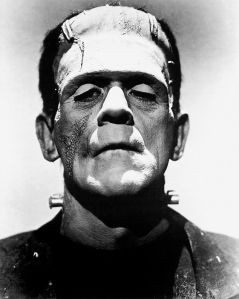 How was he created? Was the monster a collection body parts grafted together from cadavers and reanimated by the use of electricity? Not in Shelly’s novel, the doctor spends two years painstakingly constructing the creature one body feature at a time. He obtains these parts by dissection and the slaughter-house. He then brings monster to life using his unspecified process.
 When Julie was asked: “What inspired you to write your first book?” – I went to Gettysburg and saw the battlefield for myself. I had never seen a battlefield of that enormity before, and the experience effected me so profoundly that it inspired me to write a book from a typical Confederate soldier’s perspective.
